01
Pain Points
Medical records are extremely important and sensitive documents that hold a lot of private information about a person. Both patients and doctors rely on them for accurate diagnoses. Over time, though, these documents get lost or misplaced, and vital information goes with them. It's a mess for patients and doctors alike, and it needs solving.
Patients
- Unable to provide their medical history in an emergency
- Have to carry multiple physical documents to every doctor's visit
- Delayed admission because insurance details aren't available
- Emergency contacts aren't available when they're urgently needed
Doctors
- No access to a patient's medical history during an emergency
- Delays in providing the right medical assistance
- No access to a patient's OPD (outpatient department) visit history
02
Possible Solution
MedicalApp is a healthcare app that acts as a comprehensive, secure medical partner for patients and healthcare providers. Patients keep their medical records in one place, so they can easily access them and share them with doctors. They can also keep track of their health, from doctor's appointments and medication schedules to test results, and upload records from hospitals, clinics and labs, so there's no need to carry paper copies.
Key Features
- Patients can upload, store and access their personal, medical and health insurance records
- Patients can book appointments with doctors in the app
- A doctor's dashboard gives easy access to a patient's medical history, diagnoses and reports
- QR and facial recognition scans let healthcare providers access a patient's records in an emergency. To protect privacy, records can only be opened with a one-time password (OTP) sent to the user or their emergency contact
03
Research Insights
In our survey, a surprisingly high share of women aged 25 to 60, 41%, said they regularly use an online doctor consultation app for non-emergency health concerns. Men used these apps too, but far less: 28%. The results show growing acceptance of telehealth, and that these apps are becoming an important supplement to in-person visits.
The study also shows a clear preference for mobile apps. Their convenience, ease of use and personalized experience suit people who want doctor consultations and medical advice at home or on the go, and they're fast becoming the preferred way for tech-savvy people to access healthcare online.
Participants often struggle to keep complete, up-to-date medical records, especially when they see several doctors across different healthcare networks. As a result, they can't quickly access important information in an emergency or when seeing a new doctor, which puts their health at risk when doctors need to make fast, informed decisions. They would benefit greatly from complete, centralized and accessible health records.
Participants want an app where their health information (medical records, insurance records, test results and other sensitive data) is stored securely in one place. That makes it easy for them and their doctors to access, simpler to share between providers, and gives an overview of their health over time. Given how sensitive health data is, privacy and security are paramount.
The app should include doctors from a wide range of specialties, from general practitioners to cardiology, oncology, orthopedics, pediatrics and more, so it can meet the health needs of every user. Doctors from different cultural and linguistic backgrounds matter too, so patients from every background feel included.
Participants also want doctors, nurses and other healthcare providers to be able to look up a patient's medical history, recent vitals, lab results and other key details quickly and easily. A clear overview of a patient's health at any moment helps clinicians give the best possible care and improves the overall patient experience.
04
User Journey Map
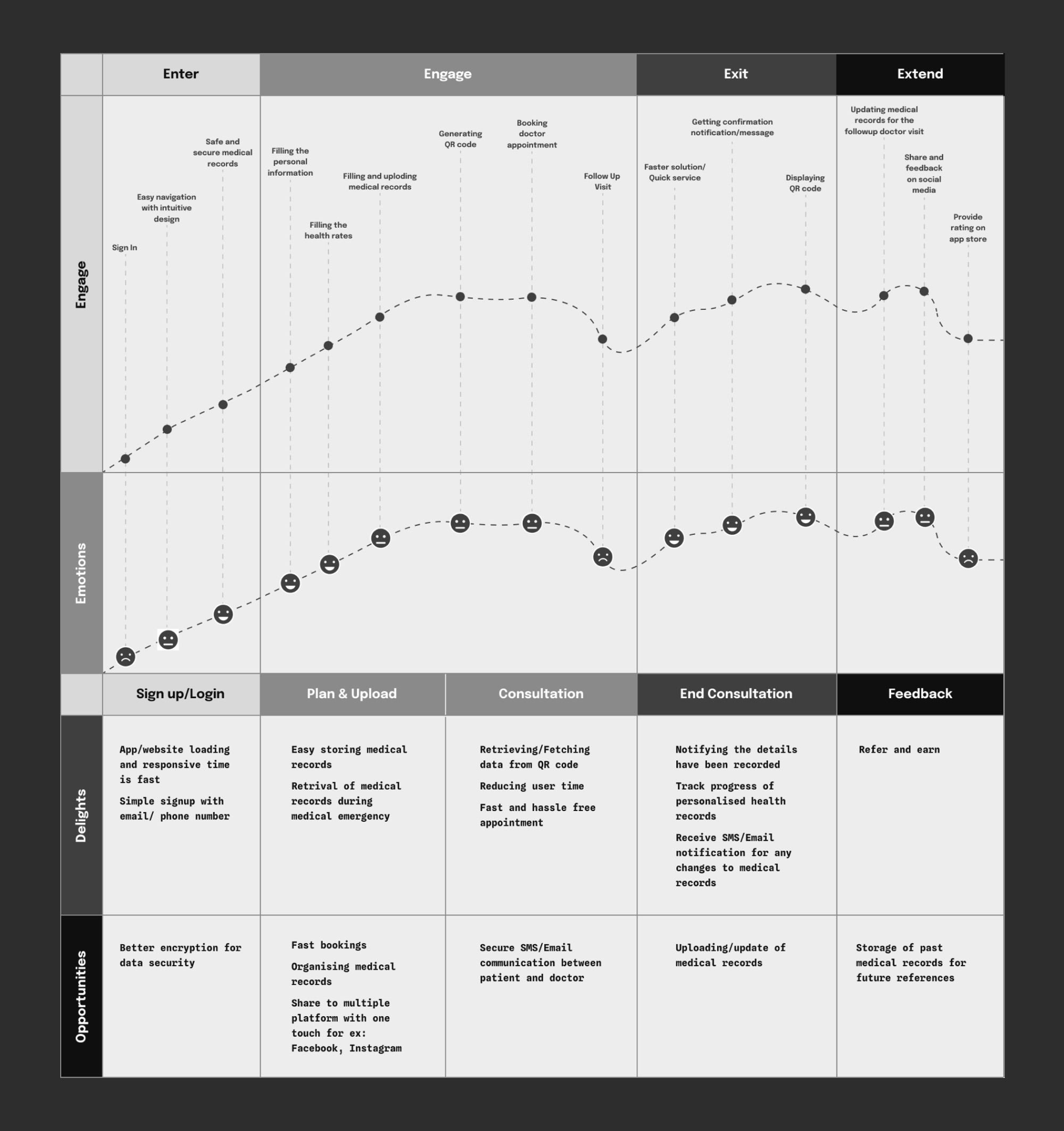
The user journey map shows how people will interact with the app, from first discovering it, through engagement, to the extension phase. It gives a full picture of the stages users go through, so the experience can be understood from start to finish. Mapping it helped me identify the crucial interactions and touchpoints, and fine-tune the experience to improve user satisfaction and engagement.
05
Competitive Analysis
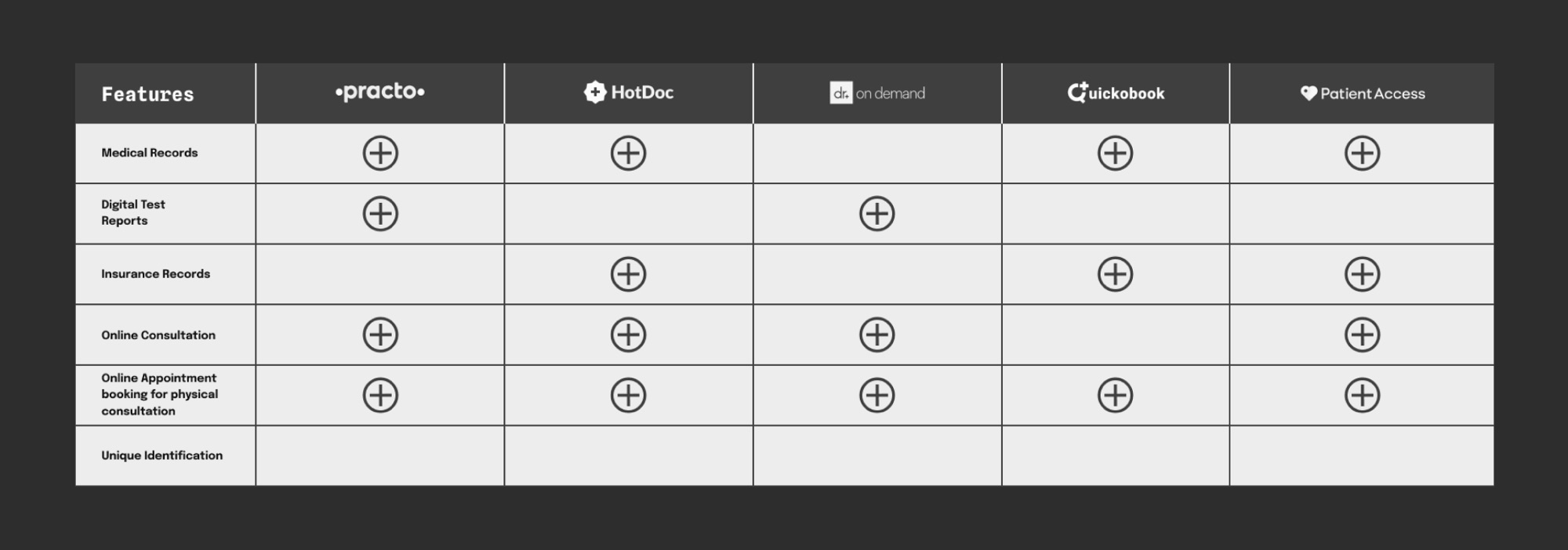
We ran an in-depth competitive analysis of leading healthcare apps to understand their strengths and weaknesses and find opportunities to do better. It showed which features users want but competitors lack, and which tools users value most, so we knew what to build in. Understanding the landscape helped us avoid common pitfalls and design a solution tailored to the needs of patients and healthcare professionals.